
This blog post is the third in a multi-part series about Indy Community Yoga’s use of public spaces to increase access, inclusion, and community-building through their practice. You can read the posts in any order: Part 1 explores affordability, and Part 2 covers meaningful partnerships.
When Tony Wiederhold decided to start offering free yoga and meditation classes in Indianapolis, he asked himself, “What would happen if I offered a class in a park and just invited people to come?” Practicing in a park, instead of a studio with a membership rate or drop-in class fees, allowed people to show up and participate without any expectation of paying to be part of the community or practice.
It was obviously a hit, since Indy Community Yoga is still going strong 6 years later. I sat down with Tony to learn about Indy Community Yoga’s community-building and power-sharing models, and how nature plays a role in their public practices. Our overall conversation was full of advice on generating accessibility, inclusion, and community. The following excerpt is part three of our interview, and brings the series back to how being in nature can catalyze mindfulness.
Marissa: We talked about how since Indy Community Yoga was started and has grown you’ve been meeting in outdoor locations so it’s accessible to people, so you don’t have to pay an entrance fee, so you can just stumble upon and join up. There’s clearly a role of placemaking and natural spaces in what you do. I’m curious: what is the role of nature for your participants as you’re meeting in these spaces?
Tony: It’s funny, this came up, ironically enough, at the library where we meditate inside. We’re in this community room slash conference room at the public library and one lady noted that she sat in a different seat than she usually does, the seat where she sat in this time was facing a window. Outside the window she could see the trees, and that calmed her. I think this is something that’s way in our brainstem somewhere. Like the color green…we’re adapted to feel drawn to green, plants, water.
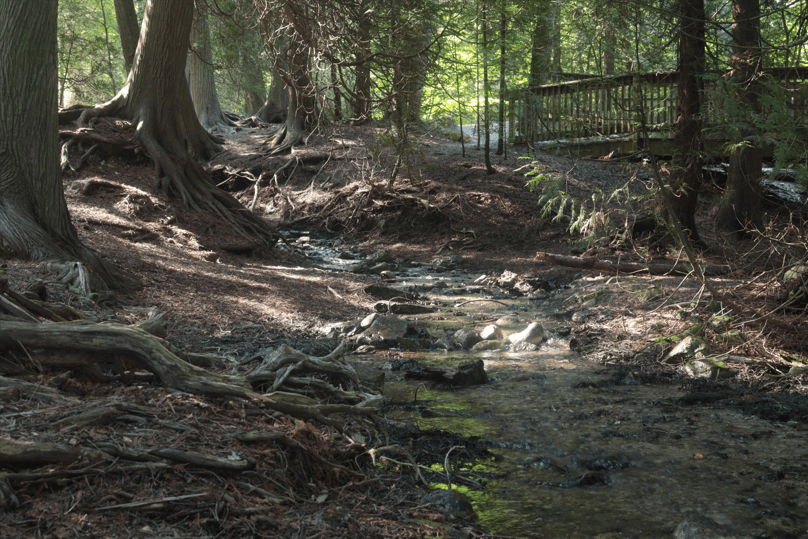
All of our retreats are in nature also. There’s something about being in nature and being in relationship with a lot of things you can’t control. The thing about the built environment is that it’s all designed for control, and to be within a certain specification. And that’s not true in nature! Out in nature there are animals, including insects. There’s wind and weather. I think in a built environment it’s easy to forget that we are related to all these things, whether we like it or not we have a relationship. We are actually part of nature.
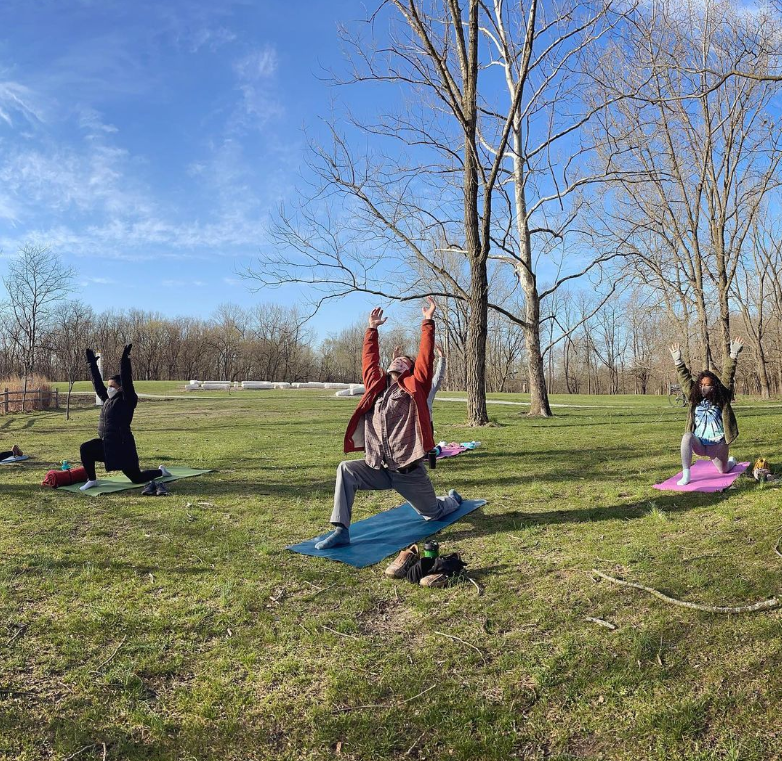
I don’t know, people like it! I like it! And it’s also when, “Ah, an eagle flew over!” Or “I didn’t know a heron sounded like that!” Or you see the turtles on the log, or a weird wind front blows through and you think it’s going to be a thunderstorm but it’s just a cooling wind.
When you’re in nature, it becomes more clear that your nature is to be free. Your nature is not to be owned by somebody, or to constantly have to produce or achieve anything. In a built environment, we’re conditioned that “a hard worker is a good person.” Or “somebody who is lazy is worthy of contempt,” or sometimes worse than contempt: unworthy of love and dignity. We don’t need to constantly oppress each other. We’re all humans, we can all be on the same level, and can all share power.
Marissa: What advice would you give someone who wants to start a meditation practice, or to someone who wants to add nature to their meditation practice?
Tony: Well, adding nature to your meditation practice can be as simple as setting up your space at home to face outside, or go to a park. My advice for anybody who wants to really start to practice meditation is to find a group of people. At the beginning it doesn’t really matter which group of people it is, but it helps. Being in a group and just sitting and not talking, and not having to talk to each other? It’s an unusual and different experience at first. It’s also very supportive. If you’re meditating in a group of people who are sincere about it, there’s nothing like that. Nobody wants anything from you, but at the same time just being present with each other is a gift.
In terms of meditation, it’s not about knowledge. That’s another thing about our culture-everything is about knowledge. I think that’s why a lot of people struggle with meditation. It’s not about knowing anything, in fact it’s about setting aside what you think you know in order to see what’s right in front of your face. How many times have you gotten upset with somebody because the person who is sitting right in front of you didn’t match the idea you had in your head about who that person was supposed to be? I think anyone who has ever been parented knows what this feels like! Or even to yourself. We have our own ideas about who we’re supposed to be, and then you come to hate who you actually are and that’s terrible.
So take it easy! If I’m going to sum up how to meditate in a nutshell, it’s literally “take it easy.” It’s entirely about ease. Number one, find ease in the body. Don’t try to sit in a way that you think somebody who meditates looks. Just make yourself comfortable. Breathe in a way that makes you feel at ease. You don’t have to breathe in any certain way.
And also, it’s ok to have thoughts. It’s ok to have feelings. The only time you can ever be free and not experience those things is when you’re dead! But you’re a human being. You don’t have to push anything away–anything you’re experiencing is valid. That’s another thing a lot of people have to learn–it’s ok to not like things. It’s ok to like things! It’s ok to like not liking things. Etc. There’s nothing to strive for and nothing to attain, take it easy and be your ordinary self.
There’s an old Zen teaching that is, “ordinary mind is the way.” Sometimes the hardest thing to do is just to be your ordinary self, because for whatever reason you feel like you have to perform a role. Maybe you feel like you have to conform to your own idea of who you are, or someone else’s idea of who you are. A large part of my meditation practice is knowing when I’m fooling myself. It’s catching myself in the act of fooling myself, and then stopping it! It’s that simple, but simple doesn’t always mean easy. And this is another reason to practice with other people, because then you can talk about stuff like this. When you do this enough and talk to other people, you realize that you’re not alone and that everybody struggles with these things. Walk with each other. That’s it.
_____________________________________________________________________________________
Tony’s experiences enhancing meditation by being in nature are something ecotherapy practitioners can relate to. Ecotherapy programs exist in all sorts of cool and exciting places like conservatories, hospitals, rehabilitation centers, and residential facilities—but they can be even more cost effective for leaders and accessible to participants when we host those programs in public spaces like parks, community gardens, or local green spaces. Partnering with public services like libraries and parks helps amplify the reach of ecotherapy. When thinking about making your practice more accessible, here are some things to consider:
- How do participants access this practice? (Is there an option to walk, bike, or take public transportation to the location?)
- How can participants navigate this space? (Are there curb cuts and ramps, or paved paths for people using mobility devices? Are public restrooms available?)
- Is there a fee associated with practicing in this space? (Whether that’s to participate in your activity, gain admission to the space, or pay for transportation) If so, are scholarships or other forms of financial inclusion available?
- What are concrete steps you can take to make your ecotherapy activities or community more inclusive and accessible?
The mindset and intention that Tony and Indy Community Yoga bring to their programming, partnerships, and community building have been influential in how I lead mindfulness hikes and view ecotherapy as a whole. I hope this series has been beneficial to you as well in thinking about new ways to engage participants in ecotherapy, and building deeper community.
Before you go, identify a physical, social, or financial barrier to participating in ecotherapy in your community that you’ll address moving forward. “Walk with each other. That’s it.”


Leave a Reply