
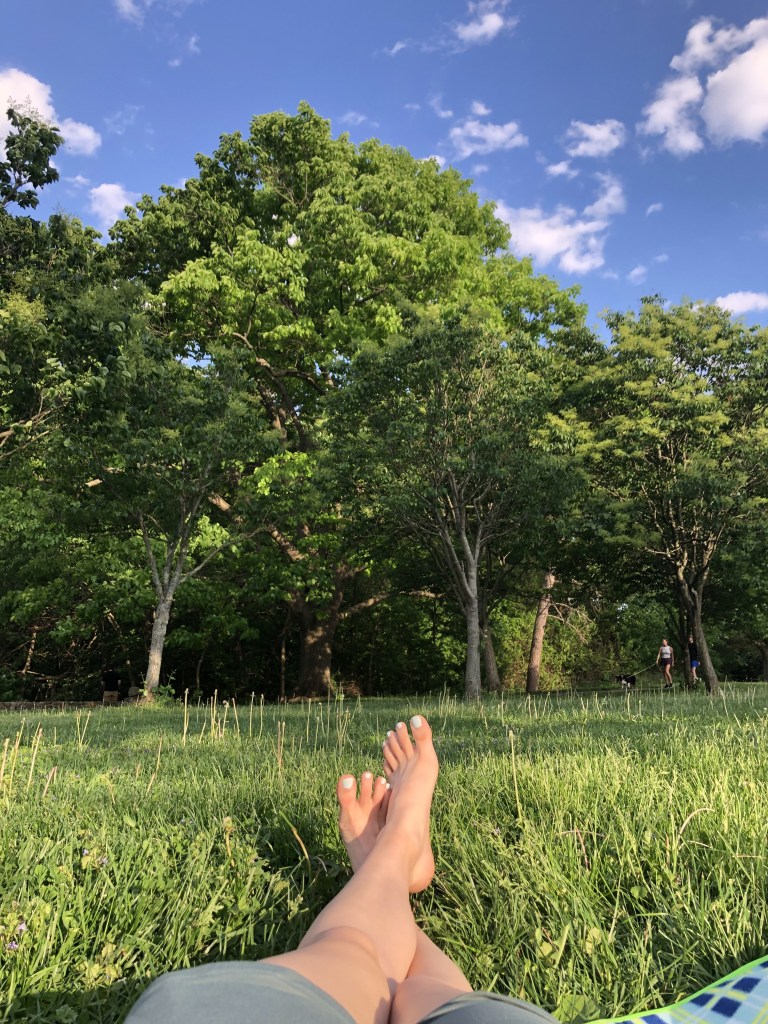
“…One is never balanced. One is always balancing.” -Teo Drake
I am a firm believer that in order to change the systems of capitalism and white supremacy culture in which we exist, we must focus on community. These systems create a disconnect between ourselves and the rest of the natural world, and even separate us from each other. To heal so many of the wounds we now suffer from, we must reconnect. We must commune. We must seek to understand and create space and hold and support one another. A quote on a crooked sticky note above my desk reads, “If we want to transgress white supremacy, we have to get good at belonging–belonging to ourselves and welcoming each other into belonging.” The note is hastily scribbled from whenever I first heard it, and I wish I had written down the quote’s author in that moment of mental puzzle pieces clicking together.
While this is true, I also believe that creating community requires a pause that the pace of our society does not often allow. Connecting with nature, and with each other, requires intentional slowness. It requires putting down the phone to look into someone’s eyes while they speak to you. It requires a break from doing and achieving to exist and observe. It requires looking up and out and around to notice the little details about the world around us and create new perceptions. I have learned so much from the founder of The Nap Ministry, Tricia Hersey, from all of her work about slowing down and resting as a radical act of resistance in our world.
As much as I have learned about rest from The Nap Ministry, at its core is Black liberation and healing from racial trauma. While I may be uncomfortable with grind culture and the pressure to produce from our society, I also navigate this world with the unearned benefit of white privilege. Who am I to take a break when there is so much to be done to heal our world? (And how can I justify just sitting and looking at trees, calling it ecotherapy, when everything seems to be on fire??)
I have been grappling with this duality for some time. How can I resist the pressure of our society to speed up and to constantly produce, while also exercising my privileges and mobilizing my passions for change? How does one balance rest and action in the modern world? Making the practice of ecotherapy accessible for everyone requires both of these things – ecotherapy requires slowness and intentionality, and meaningful change for equity requires collective action.
I certainly don’t have a magic answer to this dilemma, and I sense that the answer may vary depending on the person and what “action” or “rest” look like to each of us. I suspect that shifting and expanding our definitions will help us navigate the balancing act.
Lengthening the spectrum of inaction to action is one way to become more comfortable with the alignment of our behaviors and values in a society that aims to exhaust us. For instance, part of my discomfort in my work comes from the long time frame in which it takes to finish a project or begin to make change, since without a final result NOW, it can feel like I’m not doing anything. Reframing the gradual steps of long-term work can be a piece of this shift.
Part of my discomfort comes from not having a “deliverable” to show the specific impact made from relationship-building or other key aspects of being in community. Understanding that intangible benefits still count and not everything needs to be measured changes my definition of “action.” And the largest part of my discomfort yet comes from comparing myself to social media influencers with vast audiences who frequently have new content or project announcements at a rate that makes me wonder if they secretly have more hours in the day, or if I’m just slacking. With the grip social media has on us, I feel sure that I am not the only one affected in this way.

So together we redefine action. Maybe you don’t have a million followers hearing your message about saving the planet. Maybe you don’t feel comfortable marching at a protest in a large crowd. Maybe you’re not ready to share your mental health testimonial with the world, or you still feel a little awkward doing ecotherapy activities in a public park. (Not to say that these things are not important, only that action looks different for everyone.) But the actions you do take – checking in on a friend, holding your loved ones accountable, building community in whatever ways you can — those matter, and they hopefully won’t cause burnout.
We may also redefine rest in this way. Maybe part of balancing is understanding that we don’t have to choose between one or the other. We can find actions that rejuvenate us, and ways to rest that bring us together into community.
Here’s to the big steps, and the little ones. To resting, in order to understand how to manage our energy. To action, in order to create a world with more rest, and more connection, for everyone.
***
The above paragraphs are only some musings of a relatively new advocate for inclusive access to nature, and I am always learning! While they may not be applicable or “new” thoughts to all readers, I hope they connect with others on this journey, and I thank you for being here.

 Ecotherapy for All
Leave a reply to Mary Cancel reply