

My neighbor and I threw a block party last week.
To me, it was magical.
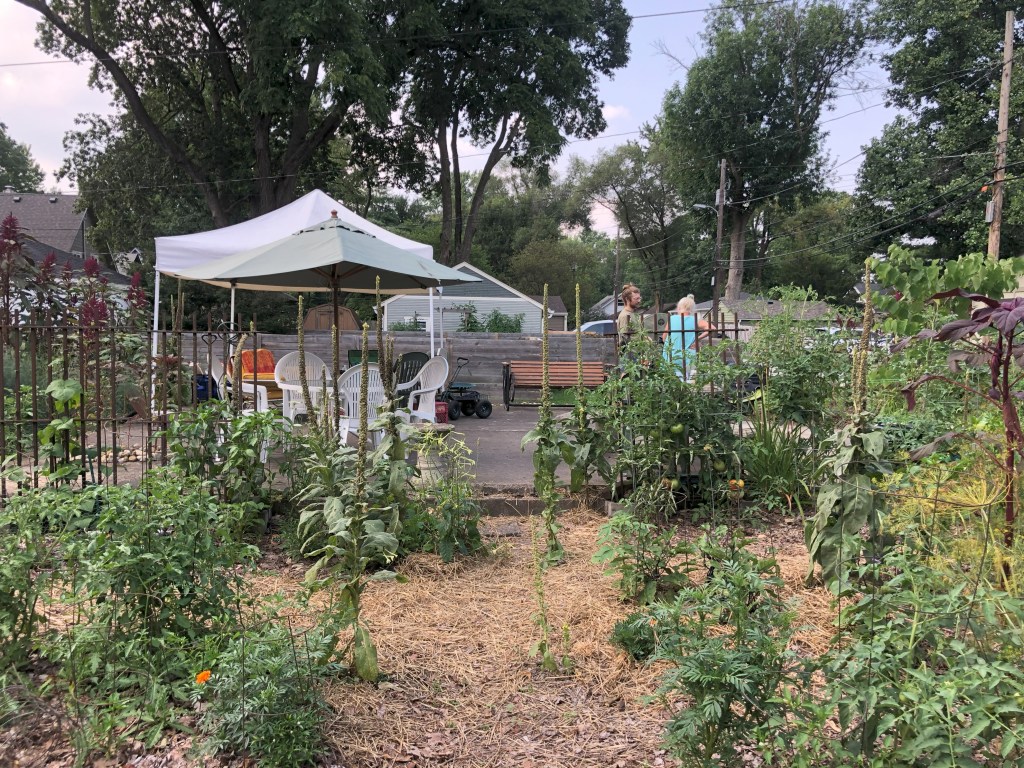
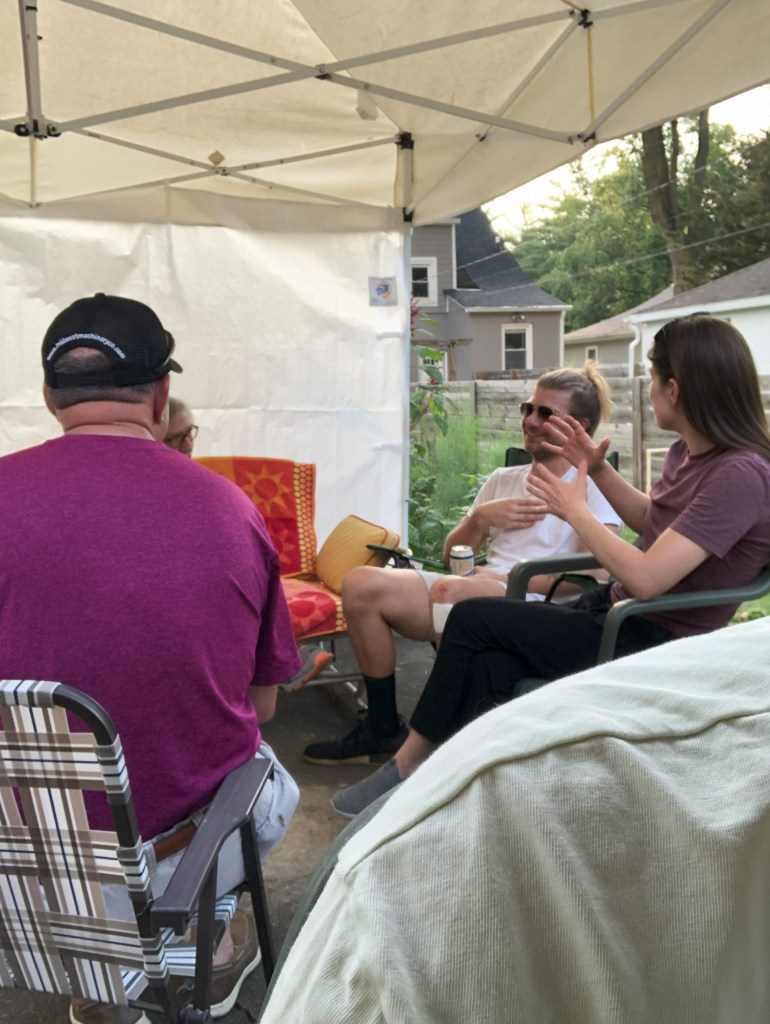
I’m still trying to break down the recipe to such an energizing gathering of strangers, but I think it all boils down to togetherness. Our experience was made up of one garden, one shade tent, a handful of chairs, and a couple dozen text invitations and notes left on doors. It was hot, humid, and the mosquitoes were biting, but I brought a jug of ice water, a few people brought natural insect repellents, and everyone brought refreshing snacks to share. It was as easy as picking a time and place, and then telling people about the plan, to pull together the most delightful evening and the first opportunity I had to meet many of my neighbors.
Or at least, on the surface it seems that easy. Truthfully, the time we spent together was made sweeter by the years of neighborhood history that made it possible. I’ve lived in my house for a year and have gradually met more neighbors over time, but out of the folks I invited to the garden party only a few attended. My co-host however, who provided the space and the shade and the seating for the party, was the true draw for the group of nearly 30 people who came and went throughout the evening. Her consistent and welcoming presence in the neighborhood, along with her and her friends’ history in and care for the place we live, is what made the gathering so special. We’ll call her C. C lives in a duplex next door to her lifelong friends and owns the lot across the street. Despite the immense development value of that plot, C maintains it as a garden and patio space. Some of the garden is planned, and some is nature’s design. You’ll often find C in the garden on mornings when it’s not too hot, or when she’s not traveling the country visiting friends.
I first met C by asking some questions about her garden while she was out and about, and that’s how many of the party guests met her too. Older friends, some who are still neighbors, and some who just came back for the evening, lovingly refer to the patio as “The Launch Pad,” and recall raising their families (and hosting fun parties) in the area years ago. Throughout our evening together, the “originals” excitedly recounted their stories and shared how much the neighborhood has changed over the years, while the love that people have for it stays much the same.
As I made the rounds meeting more neighbors in the garden, I also learned the story of the flower murals that decorate a few blocks of alleyway garages, and was delighted to find that some folks had noticed and remembered my hand-painted yard sign that informs passersby about the vultures that roost in our tree. Being able to identify each other by our art was an experience I don’t have a word for.
At the risk of this becoming a “you had to be there” moment, I’ll get to the point. These little connections, like four hours of small talk on a Wednesday night or interactive sidewalk chalk, add up to become powerful tools for addressing the mental health crisis and the climate crisis.
When it comes to these large-scale challenges, we know that we can’t fix them on our own. But knowing this doesn’t stop the feelings of overwhelm or anxiety or hopelessness. Being together does. There are a few ideas that stood out to me from our little garden party that point toward local connection as a strategy for climate and mental health action:
Passing down & creating love of a place.
Environmental educators and activists often say that unless someone knows and loves nature, they don’t have the incentive or inspiration to protect it. But we often see this phrase used to describe “the great outdoors,” rather than the street we live on. Well-connected communities and intergenerational relationships are vital for letting people know, “This place is special, and it is worth saving.” Saving, in this case, can mean any number of things. It could be building resilience against extreme weather or heat, or regularly picking up litter, or organizing for rent control or a co-op in an apartment building, or establishing mutual aid or public art, or whatever strengths and interests neighbors want to rally around.
The “original” neighbors at the garden party shared their memories and demonstrated how well-loved our space is through their personal stories. My friend C helps create connections to this neighborhood by cultivating a flower-filled lot that makes her street unique and saves a space for people to stop, chat, and meet each other in a beautiful setting. A few hours with strangers in a garden uplifted my sense of belonging and supported my mental health for the whole next week.
The factors that make a place special vary from neighborhood to neighborhood, town to town, but when we take time to know the people who share our habitat, learn about the resources there worth protecting, and develop shared meaning, it becomes easier to come together (reducing social isolation) and turn the love we have for the spaces we live in into climate action.
Art and nature shape a sense of place.
For some, a house is just a house. A street is just a street. It takes time, attention, and intention to transform these basics into a home or a community. If we want to develop care for a place to inspire climate action in our own neighborhoods, we will need to work together to make these spaces beautiful and healthy for people to gather in.
I’m very fortunate to have some neighbors who maintain their own little patches of specialness, in the form of garage murals or replacing their grass lawns with vibrant native prairies. Their care inspired me to make a yard sign that teaches passersby about the two types of vultures who roost in my front tree, which in turn inspires people to stop and crane their necks to take a peek at these large, interesting birds. That pause for bird watching, however brief, is a moment of connection. The inspiration I took from other neighbors is a moment of connection. These points added up to the desire to have our block party, and hopefully will contribute to more connection (a major mental health support) in the future.
In neighborhoods that have more of a built environment than natural spaces, placemaking with raised beds and planters or chalk art can have similar effects. Beyond individual action, collective action to create and steward more urban green spaces is vital to making our cities and towns more adaptable to climate change’s effects, in addition to simply curating spaces that people enjoy existing and gathering together.
Consistency leads to resilience.
In the age of instant gratification, it can seem like a disappointment to learn that building community is not a one-time action. It is a series of actions over time that build trust through consistency and shared understanding.
Our block party was such a success because of the people who have lived in the neighborhood and built their relationships over the course of decades. New people were brought into relation because of C’s consistency caring for her garden and being available to new connections there. Being present, and continuing to show up, contributes to togetherness. And this togetherness lends itself to resilience, when neighbors can come together and take action to protect the place they live, or take care of each other as we see the impacts of climate change accelerate.
I first learned about this framework from the International Transformational Resilience Institute, one of the key organizers behind the Community Mental Wellness & Resilience Act of 2023 (CMWRA). This proposed legislation in the US takes a public health approach to improving mental health, using protective factors to stave off mental health challenges before they occur. Their proposed model uses the support of social infrastructure, specifically “Resilience Coordinating Networks,” to help neighbors build presencing and purposing skills to heal or prevent trauma. CMWRA would provide planning and programming funding to start up these community-run organizations (which would be a huge win for mental health!) but in the meantime, we can start to build these networks in our own communities the old-fashioned way—by getting to know our neighbors, giving time and energy to relationships and placemaking, and coming together to combine our strengths and resources.
Start with your own habitat.
Our society is facing large-scale problems. But the solutions to our climate crisis and our mental health crisis can be small. So small, they can happen on your own block. As we work together to shift our divided communities into places of intention, care, and beauty (supported by systemic changes that fund mental health and protect our environment), we create our own support systems by being part of a larger mission, and contribute to building a healthier habitat that we can all share.
Maybe you already know your neighbors and are wondering how the heck I don’t know mine yet. What a beautiful chance to facilitate opportunities for your neighbors to work together to make your area more climate resilient, or reduce your environmental impact together. Maybe you’re like me, and you’re slowly building relationships in a new place. There is just as much potential there to share your dreams for your neighborhood with others and invest in creative ways to connect.
Wherever you are on your way to togetherness, you’re certainly not alone in the hope for a habitat that is conducive to community connection, mental health, and environmental health. Whether you start with a box of chalk or a few chairs on a patio, your presence and your actions are important for bringing people together. I can’t wait to hear about what you create!
Ideas for connecting with neighbors:
- Organize a standing neighborhood walk, where litter clean-up and socializing are both part of the experience!
- Add interactive art to your yard/sidewalk/patio/balcony.
- Create ways for people to learn about the plants or animals in your yard, whether you have space for lots of native plants and pollinators or a few pots of herbs!
- Establish a phone tree or mutual aid system so that neighbors can easily check in on each other during power outages, severe weather, or just spreading the word about things like block parties and welcoming newcomers to the block.
- Spend more time outside, either at your own place or in a public park. It’s a small but important step to be willing to wave at or make small talk with the people you meet there!
- What other ideas do you have for building an inclusive community in your own habitat? Share in the comment section below!
More on the Community Mental Wellness & Resilience Act of 2023 (CMWRA):
- The Community Mental Wellness & Resilience Act would fund and provide technical assistance to support the formation and operation of broad and diverse coalitions across the nation that build mental wellness and resilience for adversities and implement local climate solutions.
- You can support this legislation by contacting your U.S. Senator and House Representative, and can use this template to take action.
 Ecotherapy for All
Leave a comment